
Traditional Marketing vs Digital Marketing For Small Businesses

“traditional marketing vs digital marketing for small businesses”
Traditional Marketing vs Digital Marketing for Small Businesses: Which is Better?
Introduction
Marketing plays an important role in the success of any business. Whether you run a local shop, a startup, or a growing company, reaching the right customers is essential. Today, businesses have two main options: traditional marketing and digital marketing.
Many small business owners often wonder which method is better. Should they invest in newspaper ads and flyers, or should they focus on social media and search engines? The answer depends on your business goals, budget, and target audience.
In this blog, we will compare traditional marketing vs digital marketing for small businesses and help you choose the right strategy.
What is Traditional Marketing?
Traditional marketing refers to promotional methods that have been used for many years. These methods do not require the internet and usually reach customers through offline channels.
Examples of Traditional Marketing
- Newspaper advertisements
- Magazine ads
- Television commercials
- Radio advertisements
- Flyers and brochures
- Billboards
- Direct mail campaigns
- Event sponsorships
Traditional marketing is still popular among businesses that want to target local audiences or customers who are less active online.
What is Digital Marketing?
Digital marketing uses online platforms and digital technologies to promote products and services. It allows businesses to connect with customers through the internet.
Examples of Digital Marketing
- Search Engine Optimization (SEO)
- Social Media Marketing
- Content Marketing
- Email Marketing
- Pay-Per-Click (PPC) Advertising
- Influencer Marketing
- Video Marketing
Digital marketing has become one of the most effective ways for small businesses to reach potential customers.
Lorem ipsum dolor sit amet, consectetur adipiscing elit. Ut elit tellus, luctus nec ullamcorper mattis, pulvinar dapibus leo.
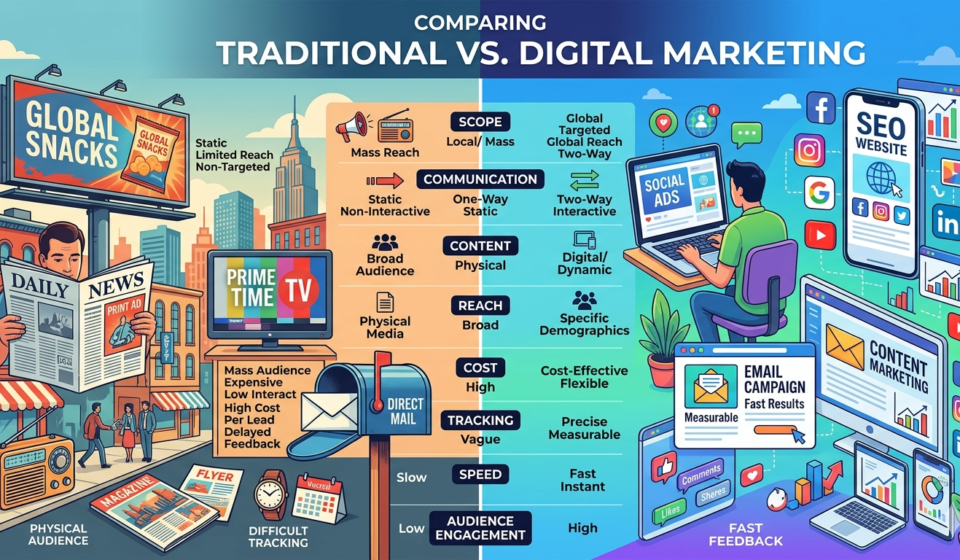
Traditional Marketing vs Digital Marketing: Key Differences
1. Cost
One of the biggest differences is cost.
Traditional marketing methods such as TV ads, newspaper ads, and billboards can be expensive. Small businesses may find it difficult to allocate large budgets for these campaigns.
Digital marketing is generally more affordable. Businesses can start with a small budget and increase spending as they grow.
Winner: Digital Marketing
2. Audience Reach
Traditional marketing often targets people in a specific geographic area.
Digital marketing allows businesses to reach customers locally, nationally, or even globally.
For example, a local bakery can attract customers from nearby areas using social media ads and Google searches.
Winner: Digital Marketing
3. Targeting Options
Traditional marketing provides limited targeting options.
Digital marketing allows businesses to target users based on:
- Age
- Gender
- Location
- Interests
- Online behaviour
This helps businesses show advertisements to people who are more likely to become customers.
Winner: Digital Marketing
4. Measuring Results
Measuring the success of traditional marketing campaigns can be challenging.
With digital marketing, businesses can track:
- Website visitors
- Ad clicks
- Leads generated
- Sales conversions
- Customer engagement
Real-time data helps business owners make better decisions.
Winner: Digital Marketing
5. Customer Interaction
Traditional marketing mainly delivers one-way communication.
Digital marketing encourages two-way communication through comments, messages, reviews, and social media interactions.
Customers can directly connect with brands and receive quick responses.
Winner: Digital Marketing
Benefits of Traditional Marketing for Small Businesses
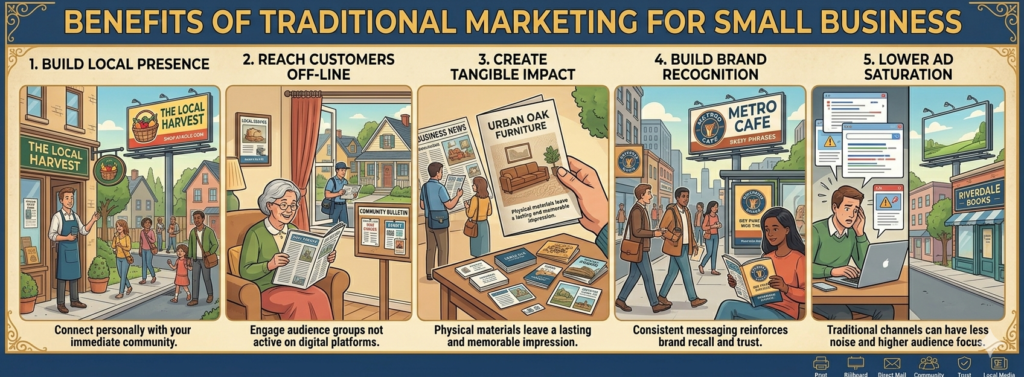
Although digital marketing is growing rapidly, traditional marketing still offers several advantages.
Builds Local Brand Awareness
Local newspapers, flyers, and community events help businesses become familiar names within their area.
Creates Trust
Many customers still trust advertisements they see in newspapers, magazines, and television.
Effective for Certain Audiences
Older generations may respond better to traditional advertising methods than online campaigns.
Tangible Marketing Materials
Brochures, business cards, and flyers provide physical materials that customers can keep for future reference.
Benefits of Digital Marketing for Small Businesses
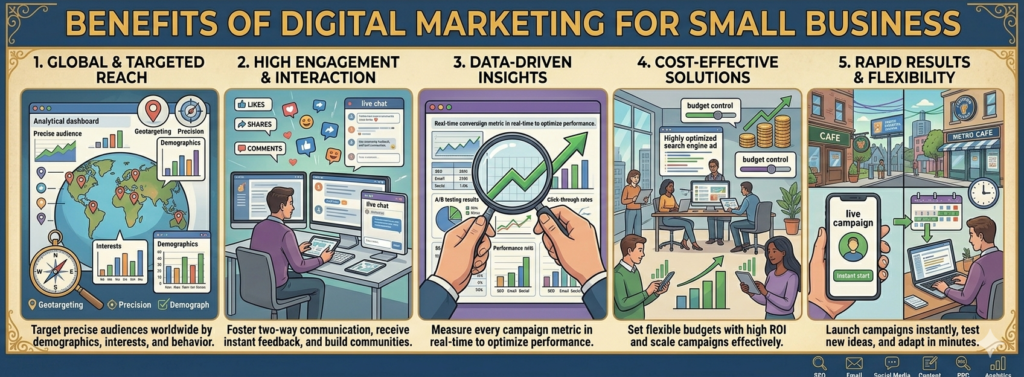
Lower Marketing Costs
Businesses can run campaigns with limited budgets and still achieve excellent results.
Better Return on Investment (ROI)
Because campaigns can be targeted and optimized, businesses often get more value from their marketing spend.
Increased Visibility
SEO and social media marketing help businesses appear where customers are actively searching for products and services.
Real-Time Analytics
Business owners can monitor campaign performance and make adjustments whenever needed.
Improved Customer Engagement
Digital channels allow businesses to build stronger relationships with customers through regular communication.
Which Marketing Strategy is Better for Small Businesses?
The choice between traditional marketing and digital marketing depends on your business needs.
Choose Traditional Marketing If:
- Your target audience is local.
- You want to build awareness within a community.
- Your customers prefer offline communication.
- You have a larger marketing budget.
Choose Digital Marketing If:
- You want affordable marketing solutions.
- You need measurable results.
- You want to reach more customers quickly.
- Your audience spends time online.
- You want higher ROI.
For most small businesses today, digital marketing provides more flexibility and better results at a lower cost.
Can Small Businesses Use Both?
Yes, absolutely.
The best approach is often a combination of traditional marketing and digital marketing.
For example:
- Distribute flyers that include your website address.
- Promote local events through social media.
- Use newspaper ads to encourage customers to follow your business online.
- Add QR codes to brochures that lead customers to your website.
By combining both methods, businesses can maximize their reach and improve customer engagement.
Future of Marketing for Small Businesses
As internet usage continues to grow, digital marketing will become even more important. However, traditional marketing will still have a place, especially for local businesses and specific customer groups.
Small businesses that combine offline and online marketing strategies will have a competitive advantage. The key is understanding where your customers spend their time and delivering the right message through the right channel.
Conclusion
When comparing traditional marketing vs digital marketing for small businesses, digital marketing clearly offers advantages in terms of cost, targeting, reach, and measurable results. It helps businesses connect with customers more efficiently and generate a better return on investment.
However, traditional marketing still remains useful for local branding and reaching audiences who prefer offline communication.
Instead of choosing one over the other, small businesses should create a balanced marketing strategy that combines the strengths of both approaches. This will help them reach more customers, increase brand awareness, and achieve long-term business growth.