
SEO

website is not ranking
SEO

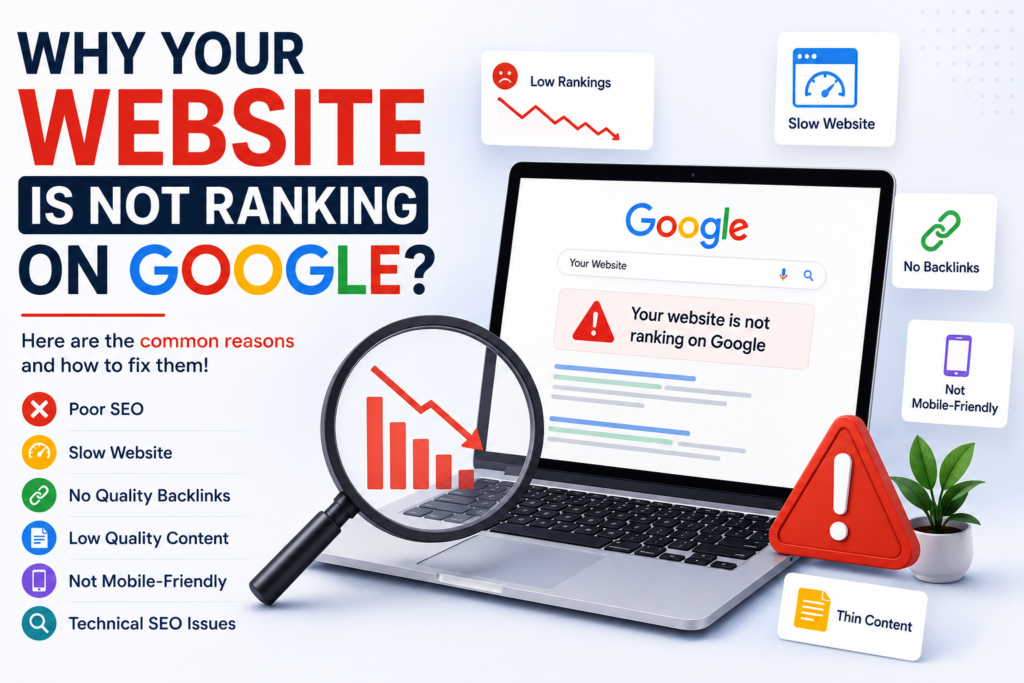
Why Your Website Is Not Ranking on Google?

Introduction Many business owners invest time and money into building a website but still struggle to appear on Google. You may have a professional website, quality products, and good services, yet your website is not generating traffic. If you are wondering why your website is not ranking on Google, you are not alone. Ranking on Google is not an overnight process. Search engines consider hundreds of factors before deciding which websites deserve top positions. The good news is that most ranking issues can be fixed with the right SEO strategy. In this blog, we will discuss the common reasons why your website is not ranking on Google and the solutions you can implement to improve your search engine visibility. Your Website Is New If your website was recently launched, it may take time for Google to trust and rank it. Google needs time to: Discover your website Index your pages Analyse your content Understand your authority Solution Be patient and continue publishing quality content regularly. SEO is a long-term strategy, and results usually take a few months. You Are Targeting Highly Competitive Keywords Many businesses try to rank for broad keywords such as: Digital marketing SEO services Website design These keywords are extremely competitive because established websites already dominate them. Solution Focus on long-tail keywords such as: Affordable SEO services for small businesses Digital marketing agency for startups Local SEO services in India Long-tail keywords are easier to rank for and attract highly targeted traffic. Your Website Is Not Properly Indexed Sometimes Google cannot find your website pages. If your pages are not indexed, they will never appear in search results. Solution Use Google Search Console to: Submit your sitemap Check indexing status Fix crawl errors Request page indexing Regularly monitor your website’s performance. Poor Quality Content Google prioritises useful and valuable content. If your website contains: Thin content Duplicate content Outdated information Keyword stuffing your rankings may suffer. Solution Create original content that solves users’ problems. Your content should: Answer common questions Be easy to understand Provide useful information Be updated regularly Quality content builds authority over time. Your Website Is Too Slow Website speed is an important ranking factor. Visitors do not like waiting for slow websites to load. A slow website can increase bounce rates and negatively impact rankings. Solution Improve website speed by: Compressing images Using a good hosting provider Enabling browser caching Reducing unnecessary plugins Optimising code A faster website provides a better user experience. Your Website Is Not Mobile-Friendly Most internet users browse websites using smartphones. If your website does not work properly on mobile devices, Google may rank it lower. Solution Make sure your website has: Responsive design Readable text Fast mobile loading speed Easy navigation A mobile-friendly website improves both user experience and SEO. You Have Weak On-Page SEO On-page SEO helps search engines understand your content. Without proper optimisation, Google may struggle to identify your page topics. Important On-Page SEO Elements Optimise: Title tags Meta descriptions Headings URL structure Image alt text Internal links Every page should target a specific keyword. You Do Not Have Quality Backlinks Backlinks act as votes of confidence from other websites. If your competitors have stronger backlink profiles, they may rank higher. Solution Build quality backlinks through: Guest blogging Business directories Industry websites Partnerships High-quality content Avoid buying low-quality backlinks because they can harm your website.  Technical SEO Problems Are Affecting Your Website Technical SEO issues can prevent Google from crawling and understanding your website. Common technical problems include: Broken links Duplicate pages Missing sitemap Redirect errors Crawl errors  Solution Perform regular technical SEO audits and fix any errors immediately. Technical SEO creates a strong foundation for better rankings. Your Website Lacks Internal Linking Internal links help search engines understand the structure of your website. Without internal links, important pages may not receive enough authority. Solution Link related pages together. For example: Link blog articles to service pages Link beginner guides to advanced guides Link relevant topics naturally Good internal linking improves both SEO and user experience. Your User Experience Is Poor Google wants users to have a positive experience when visiting websites. Poor user experience can affect rankings. Signs of Poor User Experience High bounce rate Difficult navigation Too many pop-ups Slow loading pages Confusing design Solution Focus on creating a simple, clean, and user-friendly website.  You Are Not Updating Your Website Regularly Search engines prefer active websites. If your website has not been updated for months, Google may consider it less relevant.  Solution Publish fresh content consistently. You can create: Blog posts Industry news Case studies Guides FAQs Regular updates signal that your website is active.  You Are Ignoring Local SEO If your business serves a local area, local SEO is essential. Without local optimisation, nearby customers may never find your business.  Solution Improve local SEO by: Creating a Google Business Profile Using location-based keywords Collecting customer reviews Adding business details to your website Local SEO helps attract nearby customers.  How Long Does It Take to Rank on Google? This is one of the most common questions. SEO is a long-term process. Generally, businesses may start seeing results within: 3 to 6 months for low competition keywords 6 to 12 months for medium competition keywords 12 months or more for highly competitive keywords The timeline depends on: Website age Competition level Content quality SEO strategy Domain authority Consistency is the key to success. https://vishu.blog/wp-admin/post.php?post=637&action=edit Conclusion If your website is not ranking on Google, do not panic. Most websites face these challenges in the beginning. The key is to identify the problem and fix it systematically. Focus on creating quality content, improving website speed, optimising SEO, building quality backlinks, and providing an excellent user experience. SEO is not a one-time task. It is an ongoing process that requires patience, consistency, and regular improvements. By implementing these strategies, your website can gradually improve its rankings, attract more visitors, and generate quality leads over time.
Why we need SEO Services in 2026
SEO

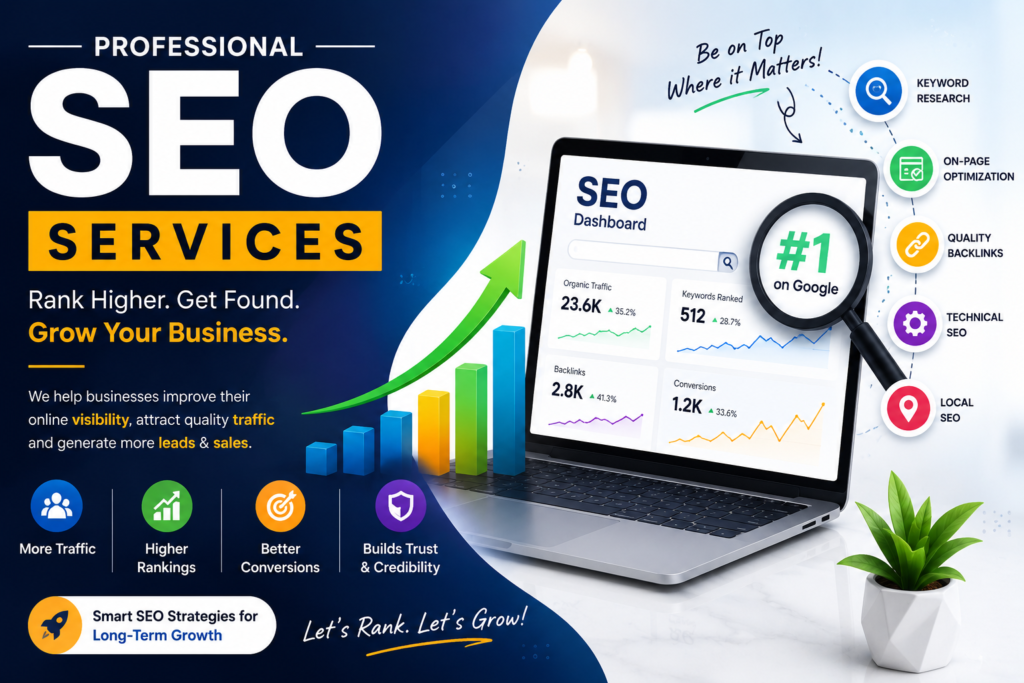
Why Your Business Needs SEO Services in 2026

Introduction In today’s digital world, having a website is not enough. Millions of businesses are competing online, and customers usually choose the companies they find on the first page of search engines. This is where SEO services become important. SEO (Search Engine Optimisation) helps your website rank higher on search engines like Google. Better rankings mean more visitors, more leads, and more sales. Whether you run a small business, startup, or large company, investing in SEO services can help you stay ahead of your competitors. What Are SEO Services? SEO services are a set of strategies and techniques used to improve a website’s visibility on search engines. These services help websites rank for relevant keywords that potential customers search online. Some common SEO services include: Keyword research On-page SEO Technical SEO Content optimisation Link building Local SEO SEO audits Performance tracking The main goal is to increase organic traffic and improve online visibility. Increase Your Online Visibility One of the biggest reasons why your business needs SEO services is improved visibility. When customers search for products or services related to your business, they are more likely to click on websites that appear on the first page of Google. If your website is not ranking well, potential customers may never find your business. SEO helps your website appear in front of the right audience at the right time. This increases brand awareness and helps more people discover your business online. Generate High-Quality Website Traffic Not all website traffic is valuable. The best traffic comes from users who are actively searching for your products or services. SEO focuses on targeting relevant keywords that match user intent. This means visitors coming from search engines are already interested in what you offer. For example, if someone searches for “digital marketing agency in Delhi,” they are likely looking for marketing services. Ranking for such keywords can bring highly targeted traffic to your website. Build Trust and Credibility Customers trust businesses that appear at the top of search engine results. A well-optimised website with quality content, fast loading speed, and good user experience creates a positive impression. Search engines also consider these factors when determining rankings. When your website consistently appears in search results, users begin to view your brand as trustworthy and reliable. SEO helps establish authority in your industry, making it easier to attract and retain customers. Improve User Experience Modern SEO is not just about keywords. Search engines now focus heavily on user experience. SEO services improve: Website speed Mobile responsiveness Easy navigation Content readability Site security A website that provides a smooth experience encourages visitors to stay longer and explore more pages. SEO Delivers Long-Term Results Unlike paid advertising, SEO continues to generate results over time. With Google Ads, traffic stops as soon as your budget ends. However, SEO can continue bringing visitors even after the initial optimisation work is completed. Although SEO requires patience, it offers sustainable growth and better long-term returns on investment. Businesses that consistently invest in SEO often enjoy stable traffic and lead generation for years. Stay Ahead of Your Competitors Your competitors are likely investing in SEO already. If your competitors rank higher than you on Google, they are getting the traffic, leads, and sales that could have been yours. Professional SEO services help you analyse competitor strategies and identify opportunities to outperform them. By targeting the right keywords and improving your website, you can gain a competitive advantage in your industry. Increase Leads and Sales Every business wants more customers and higher revenue. SEO helps attract people who are actively looking for solutions. These users are more likely to convert into leads and paying customers. For example: A local business can receive more phone calls. An e-commerce store can increase product sales. A service-based company can generate more enquiries. SEO supports every stage of the customer journey, from awareness to conversion. Local SEO Helps Nearby Customers Find You If your business serves a specific city or region, local SEO is extremely important. Local SEO helps your business appear in: Google Maps results Local search listings “Near me” searches Many customers search for businesses near their location before making a purchase decision. By optimising your website and business profile, SEO services help you reach local customers who are ready to buy. Better Return on Investment (ROI) Compared to many marketing channels, SEO offers excellent ROI. Since SEO targets users who are already searching for your products or services, conversion rates are often higher than traditional advertising methods. Benefits of SEO ROI include: Lower customer acquisition costs Consistent lead generation Increased brand visibility Long-term traffic growth For businesses with limited marketing budgets, SEO can be one of the most cost-effective digital marketing strategies. SEO Supports Other Digital Marketing Efforts SEO works well with other marketing channels such as: Content marketing Social media marketing Email marketing Performance marketing PPC advertising A strong SEO foundation improves the effectiveness of all your digital marketing activities. For example, blog content created for SEO can also be shared on social media and through email campaigns, increasing its reach and impact. Why Professional SEO Services Matter Many businesses try to handle SEO themselves but often struggle because SEO is constantly changing. Professional SEO services provide: Expert knowledge Advanced tools Regular website audits Competitor analysis Performance tracking Updated SEO strategies SEO professionals stay updated with search engine algorithm changes and industry trends, helping your website maintain strong rankings. This allows business owners to focus on running their business while experts handle optimisation. Conclusion The online marketplace is becoming more competitive every year. Businesses that fail to invest in SEO risk losing potential customers to competitors who are more visible online. If you are wondering why your business needs SEO services, the answer is simple: SEO helps improve visibility, attract quality traffic, build trust, generate leads, and increase revenue. Whether you run a local business, startup, or established company, SEO is no longer optional. It is an essential part of a successful digital marketing strategy.

SEO

SEO in 2026: How Search Optimization Has Evolved in the Age of AI

SEO in 2026: How Search Optimization Has Evolved in the Age of AI Introduction Search Engine Optimization (SEO) has undergone a dramatic transformation over the past few years. What once revolved around keyword density, backlinks, and technical tweaks has evolved into a sophisticated discipline driven by artificial intelligence, user intent, and content quality. In 2026, SEO is no longer just about ranking on search engines—it is about becoming the most trusted and relevant source of information across multiple search experiences. The rise of AI-powered search engines, voice assistants, conversational search, and personalized search results has reshaped how businesses approach online visibility. As users increasingly seek instant answers rather than lists of links, marketers must adapt their SEO strategies to remain competitive. This article explores the state of SEO in 2026, the key trends shaping the industry, and the best practices businesses should follow to succeed in the modern search landscape. The Evolution of Search in 2026 Search engines have become significantly more intelligent thanks to advancements in artificial intelligence and machine learning. Modern search algorithms can understand context, intent, sentiment, and even the credibility of information sources. Instead of matching exact keywords, search engines now focus on understanding what users truly mean when they enter a query. This shift has made content relevance and expertise more important than ever. Users are also interacting with search engines differently. Many searches are conducted through voice commands, AI assistants, smart devices, and conversational interfaces. As a result, SEO strategies must account for multiple search formats beyond traditional web searches. AI-Powered Search Is Changing Everything Artificial intelligence has become the foundation of modern search engines. AI-generated search summaries often provide users with direct answers without requiring them to click on a website. For businesses, this means that ranking first is no longer the only goal. Content must now be optimized to appear in AI-generated responses, featured snippets, knowledge panels, and answer boxes. To achieve visibility in AI-powered search environments, websites must: Publish authoritative and accurate content. Provide clear answers to user questions. Use structured data markup. Demonstrate expertise and trustworthiness. Maintain content freshness through regular updates. In 2026, brands that establish themselves as reliable sources of information have a much greater chance of being cited by AI-driven search systems. User Intent Is More Important Than Keywords Keywords remain important, but their role has evolved. Search engines can now understand semantic relationships between words and phrases, reducing the need for exact keyword matching. Modern SEO focuses on search intent, which generally falls into four categories: Informational Intent Users seek knowledge or answers to questions. Example: “What is SEO in 2026?” Navigational Intent Users want to visit a specific website. Example: “OpenAI homepage” Commercial Intent Users are researching products or services before making a purchase. Example: “Best SEO tools for agencies” Transactional Intent Users are ready to take action. Example: “Buy SEO software” Creating content that aligns with user intent has become one of the strongest ranking factors in modern SEO. The Rise of E-E-A-T Google and other search engines increasingly evaluate content using the E-E-A-T framework: Experience Expertise Authoritativeness Trustworthiness In 2026, websites that demonstrate real-world experience and industry expertise consistently outperform low-quality content farms. Businesses can strengthen E-E-A-T by: Publishing expert-written content. Including author biographies. Showcasing credentials and certifications. Citing reliable sources. Maintaining transparent business information. Trust has become a competitive advantage in search rankings. Content Quality Over Content Quantity A decade ago, many websites focused on publishing large volumes of content to attract traffic. In 2026, quality consistently beats quantity. Search engines prioritize content that: Solves user problems. Provides unique insights. Includes expert perspectives. Offers actionable recommendations. Remains accurate and updated. Long-form, comprehensive content often performs well because it addresses topics in greater depth. However, length alone does not guarantee success. The primary goal is delivering value to readers. Content creators should focus on creating resources that users genuinely want to read, share, and reference. Voice Search and Conversational SEO Voice search continues to grow as consumers use smartphones, smart speakers, and AI assistants to find information. Unlike traditional searches, voice queries are more conversational. For example: Traditional search: “SEO trends 2026” Voice search: “What are the most important SEO trends in 2026?” To optimize for voice search, businesses should: Use natural language. Create FAQ sections. Answer common questions directly. Target long-tail keywords. Optimize for local searches. Content that mirrors how people naturally speak is more likely to perform well in conversational search environments. Technical SEO Still Matters Despite the growing influence of AI, technical SEO remains essential. Search engines favor websites that provide excellent user experiences. Key technical SEO factors in 2026 include: Core Web Vitals Page speed, visual stability, and responsiveness continue to impact rankings. Mobile Optimization Most searches occur on mobile devices, making mobile-first design mandatory. Website Security HTTPS remains a critical trust signal. Structured Data Schema markup helps search engines understand website content and improve visibility in rich search results. Crawlability Websites must ensure that search engine bots can access and index important pages efficiently. Technical excellence creates a strong foundation for all other SEO efforts. The Growing Importance of Topical Authority Search engines increasingly reward websites that demonstrate deep expertise in specific subjects. Rather than publishing content across unrelated topics, successful websites build topical authority by covering a niche comprehensively. For example, a digital marketing website should create interconnected content about: SEO Content marketing Link building Analytics AI marketing Search advertising This approach signals expertise and helps search engines recognize the website as an authority within its industry. Local SEO in 2026 Local search remains vital for businesses that serve specific geographic areas. Consumers frequently search for: Restaurants near me Dentists nearby Local service providers Retail stores To improve local SEO performance, businesses should: Maintain accurate business profiles. Collect customer reviews. Optimize location-specific pages. Use local keywords. Keep contact information consistent across platforms. Local visibility can drive highly qualified traffic and increase conversions. Measuring SEO Success Modern SEO success extends beyond rankings. Key performance indicators (KPIs) include:

SEO

SEO: The Ultimate Guide to Improving Your Website’s Visibility

SEO: The Ultimate Guide to Improving Your Website’s Visibility Introduction In today’s digital landscape, having a website is no longer enough. Millions of websites compete for attention every day, making it challenging for businesses and individuals to stand out online. This is where Search Engine Optimization (SEO) becomes essential. SEO is the process of improving a website’s visibility on search engines like Google, Bing, and Yahoo. When implemented effectively, SEO helps websites rank higher in search results, attract more organic traffic, and generate valuable leads and conversions. Whether you own a small business, run an e-commerce store, or manage a personal blog, understanding SEO can significantly impact your online success. This article explores the fundamentals of SEO, its importance, key components, and best practices for achieving better search engine rankings. What is SEO? Search Engine Optimization (SEO) refers to the practice of optimizing a website to improve its position in search engine results pages (SERPs). Search engines use complex algorithms to determine which pages are most relevant and valuable for users’ search queries. SEO helps websites align with these algorithms by improving content quality, website structure, and overall user experience. The primary goal of SEO is to increase organic traffic, which refers to visitors who arrive at a website through unpaid search engine results. Unlike paid advertising, SEO focuses on earning visibility naturally through optimization efforts. Why is SEO Important? SEO plays a crucial role in digital marketing for several reasons: 1. Increases Organic Traffic Most online experiences begin with a search engine. Higher rankings mean greater visibility, leading to more website visitors without spending money on advertisements. 2. Builds Credibility and Trust Users tend to trust websites that appear on the first page of search results. Strong SEO practices help establish authority and credibility in your industry. 3. Improves User Experience Modern SEO focuses heavily on user experience. Faster loading times, mobile-friendly designs, and high-quality content contribute to both better rankings and increased user satisfaction. 4. Generates Long-Term Results Unlike paid advertising, which stops producing results when the budget runs out, SEO provides long-lasting benefits. A well-optimized page can continue attracting traffic for months or even years. 5. Provides Competitive Advantage Businesses investing in SEO often outperform competitors who neglect it. Higher visibility can lead to increased brand awareness, customer acquisition, and revenue growth. Key Components of SEO SEO consists of several interconnected elements that work together to improve website performance. 1. On-Page SEO On-page SEO involves optimizing individual pages to improve their relevance and search visibility. Important on-page factors include: Keyword research and placement High-quality content creation Optimized title tags Meta descriptions Header tags (H1, H2, H3) Internal linking Image optimization URL structure Creating valuable and informative content that addresses user intent is one of the most important aspects of on-page SEO. 2. Off-Page SEO Off-page SEO focuses on activities outside the website that influence rankings. Common off-page SEO strategies include: Building high-quality backlinks Social media promotion Influencer outreach Guest blogging Brand mentions Backlinks from authoritative websites act as votes of confidence, signaling to search engines that your content is trustworthy and valuable. 3. Technical SEO Technical SEO ensures that search engines can efficiently crawl, index, and understand your website. Key technical SEO elements include: Website speed optimization Mobile responsiveness Secure HTTPS connection XML sitemaps Structured data markup Canonical tags Crawl error fixes A technically sound website provides a better experience for both users and search engine bots.   The Role of Keywords in SEO Keywords are the terms and phrases users type into search engines when looking for information. Effective keyword research helps identify topics your target audience is searching for. There are several types of keywords: Short-Tail Keywords These are broad search terms such as “SEO” or “digital marketing.” They typically have high search volume but strong competition. Long-Tail Keywords These are more specific phrases like “best SEO strategies for small businesses.” Long-tail keywords often have lower competition and higher conversion rates. Local Keywords Local keywords target users in specific geographic locations, such as “SEO agency in Delhi” or “digital marketing services near me.” Using keywords naturally throughout your content helps search engines understand the topic of your page while improving its relevance for users. Content: The Foundation of SEO Content remains one of the most important ranking factors. Search engines prioritize content that is helpful, informative, and relevant to user queries. To create SEO-friendly content: Focus on solving user problems Use clear headings and subheadings Include relevant keywords naturally Update outdated information regularly Add visuals such as images and videos Ensure readability and proper formatting High-quality content not only improves rankings but also encourages users to spend more time on your website. SEO Trends to Watch SEO continues to evolve as search engines become more sophisticated. Some important trends include: Artificial Intelligence Search engines increasingly use AI to understand user intent and deliver more relevant results. Content should focus on providing genuine value rather than keyword stuffing. Voice Search Optimization With the growing popularity of voice assistants, optimizing for conversational queries is becoming more important. Mobile-First Indexing Google primarily uses the mobile version of a website for indexing and ranking. Mobile optimization is now a necessity rather than an option. User Experience Signals Factors such as page speed, navigation, and engagement metrics continue to influence rankings. E-E-A-T Principles Google emphasizes Experience, Expertise, Authoritativeness, and Trustworthiness when evaluating content quality. Common SEO Mistakes to Avoid Many websites fail to achieve strong rankings due to avoidable mistakes, including: Keyword stuffing Duplicate content Slow page loading speed Poor mobile usability Broken links Ignoring technical SEO Low-quality backlinks Publishing thin or unhelpful content Avoiding these issues can significantly improve your website’s performance and search visibility. Conclusion SEO is a powerful digital marketing strategy that helps websites gain visibility, attract qualified traffic, and achieve long-term growth. By focusing on on-page optimization, technical improvements, quality content, and authoritative backlinks, businesses can improve their search engine rankings and reach a wider audience. As search engines continue to evolve, successful SEO requires

Scroll to Top