
Social Media Marketing

trends of Social Media in Businesses
Social Media Marketing

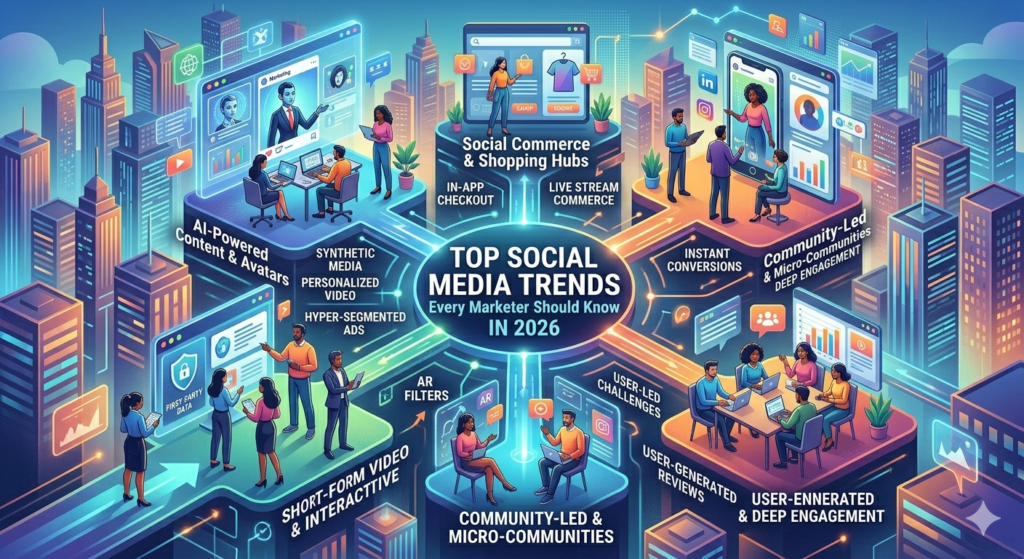
Top Social Media Trends Every Marketer Should Know in 2026

Social Media Trends Every Marketer Should Know in 2026 Introduction Social media has become one of the most powerful tools for businesses to connect with customers, build brand awareness, and drive sales. With billions of active users across platforms like Instagram, Facebook, LinkedIn, YouTube, and X, social media marketing continues to evolve rapidly. As technology advances and user behaviour changes, marketers need to stay updated with the latest trends to remain competitive. Strategies that worked a few years ago may not deliver the same results today. In 2026, social media marketing is expected to focus more on personalisation, video content, AI-powered tools, and community engagement. In this blog, we will discuss the top social media trends every marketer should know and how businesses can use them to improve their marketing efforts. Short-Form Video Content Will Continue to Dominate Short-form videos have transformed social media marketing. Platforms like Instagram Reels, YouTube Shorts, and Facebook Reels have become popular because users prefer quick and engaging content.  Why Short-Form Videos Are Effective Higher engagement rates Better reach and visibility Easy content consumption Increased sharing opportunities Improved brand awareness Businesses should create educational, entertaining, and informative short videos to attract and retain audiences. Artificial Intelligence (AI) Will Transform Social Media Marketing AI is helping marketers create content, analyse customer behaviour, and automate repetitive tasks. Many businesses are already using AI-powered tools to improve campaign performance and customer engagement.  Applications of AI in Social Media Content creation assistance Chatbots for customer support Audience targeting Social listening Performance analysis AI can help marketers save time while delivering more personalised experiences to customers. Social Commerce Will Grow Rapidly Social media platforms are no longer just communication channels. They are becoming complete shopping destinations. Customers can now discover products, read reviews, and make purchases directly within social media apps.  Benefits of Social Commerce Seamless shopping experience Faster purchasing decisions Increased product visibility Better customer engagement Businesses selling products online should optimise their social media profiles for social commerce opportunities. Influencer Marketing Will Become More Authentic Influencer marketing continues to deliver strong results, but audiences are now looking for authenticity rather than celebrity endorsements. Micro and nano influencers are gaining popularity because they have highly engaged communities and stronger trust levels. Why Brands Prefer Micro Influencers Higher engagement rates Cost-effective collaborations Better audience trust Niche-specific targeting Businesses should focus on building long-term partnerships with influencers who genuinely align with their brand values.   User-Generated Content Will Build More Trust Consumers trust content created by real customers more than traditional advertisements. User-generated content (UGC) includes reviews, testimonials, photos, videos, and social media mentions shared by customers. Benefits of User-Generated Content Builds credibility Increases customer trust Improves engagement Provides authentic brand promotion Encouraging customers to share their experiences can significantly improve brand reputation. Personalised Content Will Drive Better Engagement Generic content is becoming less effective as customers expect personalised experiences. Marketers who deliver relevant content based on customer interests and behaviour are more likely to achieve better results. Ways to Personalise Social Media Content Audience segmentation Behaviour-based recommendations Custom offers Personalised messaging Dynamic advertisements Personalisation helps businesses strengthen customer relationships and improve conversion rates. Social Media Communities Will Become More Valuable Building communities is becoming more important than simply gaining followers. Customers want meaningful interactions with brands and other users who share similar interests. Community-Building Strategies Create private groups Host live sessions Encourage discussions Respond to comments Share valuable insights Strong communities increase customer loyalty and create long-term brand advocates. Live Streaming Will Continue to Grow Live streaming provides businesses with an opportunity to interact with audiences in real time. It creates a sense of authenticity and allows brands to answer customer questions instantly. Popular Live Content Ideas Product launches Q&A sessions Tutorials Webinars Behind-the-scenes content Live streaming helps brands create stronger connections with their audience and improve engagement. Employee-Generated Content Will Gain Popularity Employees can become powerful brand ambassadors on social media. People often trust employees more than corporate advertisements because their content feels genuine and relatable. Benefits of Employee Advocacy Increased brand reach Improved credibility Better engagement Stronger employer branding Encouraging employees to share company updates and experiences can positively impact brand perception. Social Listening Will Become Essential Social listening involves monitoring conversations about your brand, industry, and competitors. Understanding customer opinions helps businesses improve products, services, and marketing strategies. Advantages of Social Listening Better customer understanding Reputation management Competitor analysis Trend identification Improved customer service Marketers who actively listen to their audience can make more informed business decisions. LinkedIn Will Continue to Grow for B2B Marketing LinkedIn remains one of the most effective platforms for professional networking and B2B marketing. Businesses can use LinkedIn to establish authority, generate leads, and build relationships with decision-makers. Effective LinkedIn Marketing Strategies Share industry insights Publish thought leadership content Engage with professionals Participate in discussions Promote case studies B2B businesses should make LinkedIn a key part of their social media strategy. Data-Driven Social Media Marketing Will Increase Successful marketers rely on data rather than assumptions. Social media platforms provide valuable analytics that help businesses measure campaign performance. Important Metrics to Monitor Engagement rate Reach Impressions Click-through rate Conversion rate Follower growth Analysing data regularly allows marketers to optimise campaigns and improve results. Voice and Visual Search Will Influence Social Media Discovery Consumers are increasingly using voice commands and image-based searches to discover content and products online. Social media platforms are adapting to these trends by improving search capabilities. How Marketers Can Prepare Use descriptive captions Optimise image alt text Include relevant keywords Create searchable content Optimising content for voice and visual search can improve discoverability and reach. Conclusion Social media marketing in 2026 will be driven by authenticity, personalisation, AI technology, and customer engagement. Marketers who stay updated with these trends will be better equipped to build stronger relationships with their audience and achieve business growth. Short-form videos, influencer marketing, social commerce, user-generated content, live streaming, and community building are among the most important trends shaping the future of social media
Social Media Marketing

Social Media Marketing: The Ultimate Guide to Building Brands and Driving Growth

In today’s digital-first world, social media has become an essential part of everyday life. Billions of people worldwide use social media platforms to connect with friends, discover new products, consume content, and engage with brands. For businesses, this presents an incredible opportunity to reach target audiences, build relationships, and drive growth. This is where Social Media Marketing (SMM) plays a vital role. Social Media Marketing is the process of using social media platforms to promote a brand, product, or service. It involves creating and sharing content, engaging with audiences, running paid advertising campaigns, and analyzing performance to achieve specific business goals. Whether you’re a startup, small business, or global enterprise, social media marketing can help increase brand awareness, generate leads, and boost sales. This article explores the fundamentals of social media marketing, its benefits, key strategies, and best practices for success in today’s competitive digital landscape. What Is Social Media Marketing? Social Media Marketing refers to the use of social media platforms to connect with audiences and achieve marketing objectives. Businesses use platforms such as Facebook, Instagram, LinkedIn, X (formerly Twitter), Pinterest, YouTube, and TikTok to share content, engage with customers, and advertise their offerings. Unlike traditional marketing channels, social media enables two-way communication between brands and consumers. This interaction helps businesses build trust, gather feedback, and create meaningful relationships with their audience. Social media marketing typically includes: Content creation and publishing Community engagement Influencer partnerships Paid social advertising Analytics and performance tracking Brand reputation management Why Social Media Marketing Is Important Social media marketing has become a cornerstone of modern business strategies for several reasons. Increased Brand Awareness Social media platforms provide businesses with access to massive audiences. Consistent posting and engagement can significantly increase brand visibility and recognition. Direct Customer Communication Businesses can communicate directly with customers through comments, messages, and posts. This direct interaction strengthens relationships and improves customer satisfaction. Cost-Effective Marketing Compared to traditional advertising methods, social media marketing is often more affordable and accessible for businesses of all sizes. Higher Website Traffic Sharing valuable content and promotions on social media can drive users to a company’s website, increasing opportunities for conversions. Improved Customer Insights Social media platforms provide valuable data about audience behavior, interests, and preferences, helping businesses make informed marketing decisions. Key Social Media Platforms for Marketing Different social media platforms serve different audiences and marketing objectives. Facebook Facebook remains one of the largest social media platforms globally. It is particularly effective for: Brand awareness Community building Lead generation Paid advertising Businesses can leverage Facebook Pages, Groups, Stories, and advertising campaigns to connect with their audience. Instagram Instagram focuses heavily on visual content and is highly popular among younger audiences. Popular content formats include: Photos Reels Stories Carousels Live videos Instagram is particularly effective for lifestyle brands, fashion, travel, food, and e-commerce businesses. LinkedIn LinkedIn is the leading professional networking platform. It is ideal for: B2B marketing Professional branding Recruitment Thought leadership Businesses often use LinkedIn to connect with decision-makers and industry professionals. TikTok TikTok has transformed social media marketing through short-form video content. Brands use TikTok to: Reach younger demographics Create viral campaigns Showcase authentic content Increase brand engagement YouTube As the world’s largest video-sharing platform, YouTube offers opportunities for long-form and short-form video marketing. Businesses use YouTube for: Tutorials Product demonstrations Educational content Brand storytelling Creating an Effective Social Media Marketing Strategy A successful social media marketing campaign requires careful planning and execution. Define Clear Goals Businesses should establish specific objectives before launching social media campaigns. Common goals include: Increasing brand awareness Driving website traffic Generating leads Growing followers Boosting sales Enhancing customer engagement Clearly defined goals help guide content creation and performance measurement. Understand Your Target Audience Knowing your audience is essential for creating relevant content. Businesses should consider: Age Gender Location Interests Occupation Online behavior Audience research helps marketers tailor content and messaging effectively. Choose the Right Platforms Not every social media platform is suitable for every business. Companies should focus on platforms where their target audience is most active rather than trying to maintain a presence everywhere. Develop a Content Plan Consistency is critical in social media marketing. A content strategy should include: Educational posts Promotional content User-generated content Behind-the-scenes updates Customer testimonials Industry news A balanced mix of content keeps audiences engaged while supporting business objectives. The Role of Content in Social Media Marketing Content is the foundation of social media success. High-quality content helps businesses: Capture attention Build trust Educate audiences Encourage engagement Drive conversions Effective content should provide value while aligning with audience interests. Popular content formats include: Videos Infographics Blog links Live streams Polls Stories Reels Visual content generally performs better because it is easier to consume and share. Social Media Advertising Organic reach has become increasingly competitive, making paid advertising an important component of social media marketing. Social media advertising allows businesses to target specific audiences based on: Demographics Interests Behaviors Locations Purchase history Benefits of social media advertising include: Increased reach Faster results Better targeting Measurable performance Scalability Platforms such as Facebook, Instagram, LinkedIn, and TikTok offer sophisticated advertising tools that help businesses achieve various marketing goals. Influencer Marketing and Social Media Influencer marketing has become a powerful extension of social media marketing. Influencers have established trust and credibility with their followers, making their recommendations highly effective. Businesses collaborate with influencers to: Increase brand awareness Promote products Generate social proof Reach niche audiences Authentic influencer partnerships often produce stronger engagement than traditional advertising. Measuring Social Media Marketing Success Tracking performance is essential for continuous improvement. Key metrics include: Reach The number of people who see your content. Engagement Interactions such as likes, comments, shares, and saves. Click-Through Rate (CTR) The percentage of users who click on links within your content. Conversion Rate The percentage of users who complete desired actions, such as making a purchase or submitting a form. Follower Growth The increase in audience size over time. Analyzing these metrics helps businesses identify successful strategies and optimize future campaigns. Common Social

Scroll to Top