
Introduction
The digital marketing landscape has undergone a remarkable transformation over the past decade, and by 2026, Artificial Intelligence (AI) has become the driving force behind nearly every successful marketing strategy. Businesses of all sizes are leveraging AI-powered tools to understand customer behavior, create personalized experiences, automate repetitive tasks, and maximize return on investment (ROI). As consumer expectations continue to evolve, marketers must embrace AI not as a luxury but as a necessity for staying competitive in the digital age.
This article explores how AI is reshaping digital marketing in 2026, the key technologies involved, and the opportunities and challenges that come with this revolution.
The Rise of AI-Powered Marketing
Artificial Intelligence refers to computer systems capable of performing tasks that typically require human intelligence, such as learning, decision-making, problem-solving, and language understanding. In digital marketing, AI analyzes vast amounts of data to identify patterns, predict customer behavior, and automate processes.
By 2026, AI is no longer limited to large enterprises. Affordable cloud-based solutions and user-friendly platforms have made advanced marketing technologies accessible to small and medium-sized businesses as well.
Companies now use AI to:
- Analyze customer data in real time
- Create personalized marketing campaigns
- Optimize advertising budgets
- Generate content automatically
- Improve customer service through intelligent chatbots
- Predict future market trends
These capabilities enable businesses to make data-driven decisions faster and more accurately than ever before.
Hyper-Personalization: The New Marketing Standard
One of the most significant impacts of AI in 2026 is hyper-personalization. Consumers expect brands to understand their preferences, behaviors, and needs. Generic marketing messages are increasingly ineffective.
AI-powered systems analyze customer interactions across websites, social media, emails, and mobile applications to create detailed customer profiles. Based on these insights, marketers can deliver highly personalized content, product recommendations, and offers.
For example, an e-commerce website can now display unique product suggestions for each visitor based on browsing history, purchase patterns, location, and even current interests. This level of personalization significantly improves customer satisfaction and conversion rates.
As a result, businesses that effectively implement AI-driven personalization gain a substantial competitive advantage.
AI-Generated Content and Creative Automation
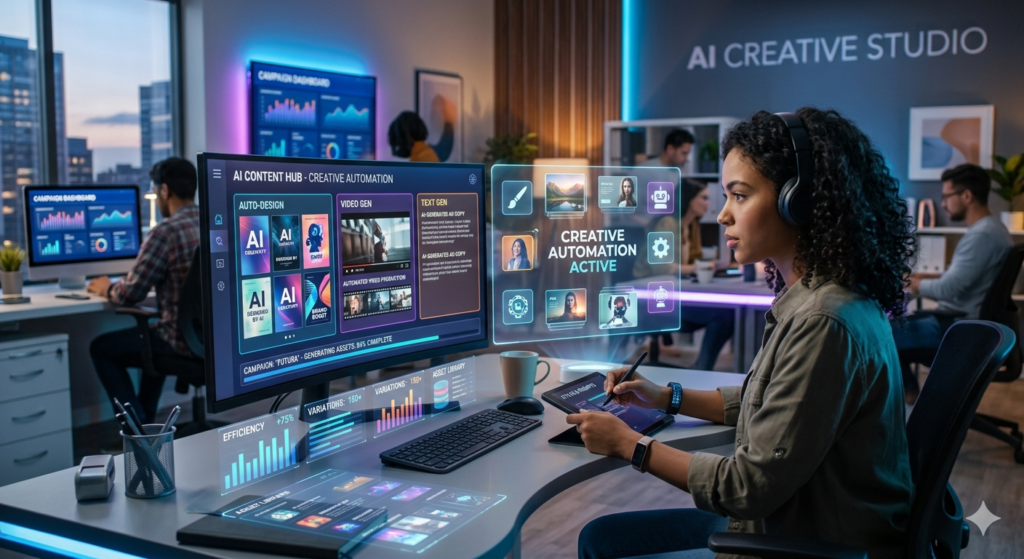
Content remains a cornerstone of digital marketing, but AI has transformed how content is created. In 2026, advanced generative AI tools assist marketers in producing blog posts, social media captions, email campaigns, video scripts, and advertising copy within minutes.
These tools not only generate content but also optimize it for specific audiences, platforms, and search engines. Marketers can quickly create multiple variations of a campaign and test which version performs best.
Video marketing has also benefited from AI. Businesses can now generate professional-quality videos using AI-powered editing tools, voice synthesis, and automated animation software. This reduces production costs and allows brands to scale content creation efficiently.
While human creativity remains essential for strategy and storytelling, AI significantly enhances productivity and speeds up execution.
Smarter Search Engine Optimization (SEO)
Search engine optimization continues to evolve as search engines become more intelligent. In 2026, AI plays a crucial role in SEO strategy and execution.
AI-powered SEO tools can:
- Identify trending keywords
- Analyze competitor performance
- Predict search intent
- Optimize website content
- Improve technical SEO
- Monitor ranking fluctuations
Search engines increasingly prioritize user experience, relevance, and intent rather than simple keyword matching. AI helps marketers understand what users are truly searching for and create content that satisfies those needs.
Voice search and conversational search have also become more prominent, requiring marketers to optimize content for natural language queries. AI tools assist businesses in adapting to these changing search behaviors.
Predictive Analytics and Data-Driven Decisions
One of AI’s most valuable contributions to digital marketing is predictive analytics. Instead of relying solely on historical data, marketers can now forecast future customer actions and market trends.
AI algorithms analyze millions of data points to predict:
- Customer purchasing behavior
- Churn risk
- Product demand
- Campaign performance
- Seasonal trends
These predictions allow businesses to proactively adjust their strategies and allocate resources more effectively.
For example, an online retailer can identify customers likely to abandon their shopping carts and automatically send personalized incentives to encourage purchases. Such proactive marketing efforts improve customer retention and revenue generation.
AI-Powered Advertising
Digital advertising has become increasingly sophisticated due to AI-driven optimization. Platforms automatically analyze audience behavior, demographics, interests, and engagement patterns to deliver highly targeted advertisements.
In 2026, AI helps marketers:
- Automate ad placement
- Optimize bidding strategies
- Identify high-performing audiences
- Create dynamic ad creatives
- Measure campaign effectiveness
Real-time adjustments ensure advertising budgets are spent efficiently. AI continuously learns from campaign performance and makes improvements without requiring constant manual intervention.
This automation allows marketing teams to focus more on strategy and innovation while AI handles operational complexities.
Conversational Marketing and AI Chatbots
Customer engagement has reached new levels through AI-powered chatbots and virtual assistants. Modern chatbots are capable of understanding context, emotions, and complex customer inquiries.
Businesses use AI chatbots to:
- Provide 24/7 customer support
- Answer frequently asked questions
- Guide customers through purchases
- Schedule appointments
- Collect customer feedback
These systems offer immediate responses, reducing wait times and improving customer satisfaction. Advanced conversational AI can even personalize interactions based on previous customer engagements.
As natural language processing technology continues to improve, the line between human and AI interactions becomes increasingly difficult to distinguish.
Challenges and Ethical Considerations
Despite its many advantages, AI-powered marketing also presents challenges. Data privacy remains a major concern as companies collect and analyze large volumes of customer information.
Regulatory frameworks around data protection continue to evolve, requiring businesses to maintain transparency and secure customer consent. Ethical AI usage has become an important component of brand trust.
Other challenges include:
- Algorithmic bias
- Data security risks
- Overdependence on automation
- Lack of human oversight
- Accuracy of AI-generated content
Successful organizations balance automation with human judgment to ensure ethical and responsible marketing practices.
The Future of Digital Marketing
Looking ahead, AI will become even more integrated into digital marketing strategies. Emerging technologies such as augmented reality (AR), virtual reality (VR), predictive customer journeys, and autonomous marketing systems will further transform how brands connect with consumers.
Marketers of the future will need a combination of creativity, analytical thinking, and technological expertise. Rather than replacing marketers, AI will serve as a powerful partner that enhances decision-making and operational efficiency.
Organizations that invest in AI skills, tools, and ethical implementation today will be better positioned to thrive in the increasingly competitive digital marketplace.
Conclusion
Digital marketing in 2026 is defined by intelligence, personalization, and automation. AI empowers businesses to understand customers more deeply, create meaningful experiences, optimize campaigns, and achieve measurable results at scale.
From content creation and SEO to predictive analytics and customer engagement, AI has become an essential component of modern marketing success. While challenges related to privacy and ethics remain, the benefits of AI-driven marketing far outweigh the risks when implemented responsibly.
As technology continues to evolve, businesses that embrace AI strategically will lead the next generation of digital innovation and customer engagement.