
Uncategorized

Marketing Comparison
Uncategorized

Traditional Marketing vs Digital Marketing For Small Businesses

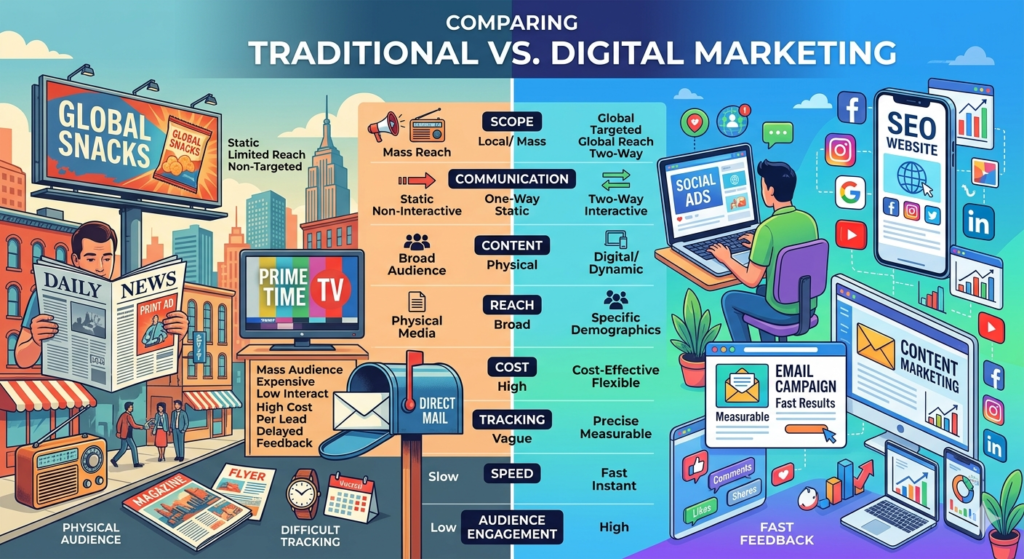
“traditional marketing vs digital marketing for small businesses” Traditional Marketing vs Digital Marketing for Small Businesses: Which is Better? Introduction Marketing plays an important role in the success of any business. Whether you run a local shop, a startup, or a growing company, reaching the right customers is essential. Today, businesses have two main options: traditional marketing and digital marketing. Many small business owners often wonder which method is better. Should they invest in newspaper ads and flyers, or should they focus on social media and search engines? The answer depends on your business goals, budget, and target audience. In this blog, we will compare traditional marketing vs digital marketing for small businesses and help you choose the right strategy. What is Traditional Marketing? Traditional marketing refers to promotional methods that have been used for many years. These methods do not require the internet and usually reach customers through offline channels. Examples of Traditional Marketing Newspaper advertisements Magazine ads Television commercials Radio advertisements Flyers and brochures Billboards Direct mail campaigns Event sponsorships Traditional marketing is still popular among businesses that want to target local audiences or customers who are less active online. What is Digital Marketing? Digital marketing uses online platforms and digital technologies to promote products and services. It allows businesses to connect with customers through the internet. Examples of Digital Marketing Search Engine Optimization (SEO) Social Media Marketing Content Marketing Email Marketing Pay-Per-Click (PPC) Advertising Influencer Marketing Video Marketing Digital marketing has become one of the most effective ways for small businesses to reach potential customers. Lorem ipsum dolor sit amet, consectetur adipiscing elit. Ut elit tellus, luctus nec ullamcorper mattis, pulvinar dapibus leo. Traditional Marketing vs Digital Marketing: Key Differences 1. Cost One of the biggest differences is cost. Traditional marketing methods such as TV ads, newspaper ads, and billboards can be expensive. Small businesses may find it difficult to allocate large budgets for these campaigns. Digital marketing is generally more affordable. Businesses can start with a small budget and increase spending as they grow. Winner: Digital Marketing 2. Audience Reach Traditional marketing often targets people in a specific geographic area. Digital marketing allows businesses to reach customers locally, nationally, or even globally. For example, a local bakery can attract customers from nearby areas using social media ads and Google searches. Winner: Digital Marketing 3. Targeting Options Traditional marketing provides limited targeting options. Digital marketing allows businesses to target users based on: Age Gender Location Interests Online behaviour This helps businesses show advertisements to people who are more likely to become customers. Winner: Digital Marketing 4. Measuring Results Measuring the success of traditional marketing campaigns can be challenging. With digital marketing, businesses can track: Website visitors Ad clicks Leads generated Sales conversions Customer engagement Real-time data helps business owners make better decisions. Winner: Digital Marketing 5. Customer Interaction Traditional marketing mainly delivers one-way communication. Digital marketing encourages two-way communication through comments, messages, reviews, and social media interactions. Customers can directly connect with brands and receive quick responses. Winner: Digital Marketing Benefits of Traditional Marketing for Small Businesses Although digital marketing is growing rapidly, traditional marketing still offers several advantages. Builds Local Brand Awareness Local newspapers, flyers, and community events help businesses become familiar names within their area. Creates Trust Many customers still trust advertisements they see in newspapers, magazines, and television. Effective for Certain Audiences Older generations may respond better to traditional advertising methods than online campaigns. Tangible Marketing Materials Brochures, business cards, and flyers provide physical materials that customers can keep for future reference.   Benefits of Digital Marketing for Small Businesses Lower Marketing Costs Businesses can run campaigns with limited budgets and still achieve excellent results. Better Return on Investment (ROI) Because campaigns can be targeted and optimized, businesses often get more value from their marketing spend. Increased Visibility SEO and social media marketing help businesses appear where customers are actively searching for products and services. Real-Time Analytics Business owners can monitor campaign performance and make adjustments whenever needed. Improved Customer Engagement Digital channels allow businesses to build stronger relationships with customers through regular communication.   Which Marketing Strategy is Better for Small Businesses? The choice between traditional marketing and digital marketing depends on your business needs. Choose Traditional Marketing If: Your target audience is local. You want to build awareness within a community. Your customers prefer offline communication. You have a larger marketing budget. Choose Digital Marketing If: You want affordable marketing solutions. You need measurable results. You want to reach more customers quickly. Your audience spends time online. You want higher ROI. For most small businesses today, digital marketing provides more flexibility and better results at a lower cost. Can Small Businesses Use Both? Yes, absolutely. The best approach is often a combination of traditional marketing and digital marketing. For example: Distribute flyers that include your website address. Promote local events through social media. Use newspaper ads to encourage customers to follow your business online. Add QR codes to brochures that lead customers to your website. By combining both methods, businesses can maximize their reach and improve customer engagement. Future of Marketing for Small Businesses As internet usage continues to grow, digital marketing will become even more important. However, traditional marketing will still have a place, especially for local businesses and specific customer groups. Small businesses that combine offline and online marketing strategies will have a competitive advantage. The key is understanding where your customers spend their time and delivering the right message through the right channel. Conclusion When comparing traditional marketing vs digital marketing for small businesses, digital marketing clearly offers advantages in terms of cost, targeting, reach, and measurable results. It helps businesses connect with customers more efficiently and generate a better return on investment. However, traditional marketing still remains useful for local branding and reaching audiences who prefer offline communication. Instead of choosing one over the other, small businesses should create a balanced marketing strategy that combines the strengths of both approaches. This will help them reach more customers,

growth with influencer marketing
Uncategorized

influencer marketing strategy for small businesses

Influencer Marketing Strategy for Small Businesses: A Complete Guide In today’s digital-first world, small businesses are constantly looking for cost-effective ways to reach their target audience. Traditional advertising can be expensive, making it difficult for startups and local businesses to compete with larger brands. This is where an influencer marketing strategy for small businesses can make a significant difference. Influencer marketing has become one of the most effective digital marketing techniques. By collaborating with trusted content creators, businesses can connect with potential customers, build credibility, and increase sales without spending a fortune. What is Influencer Marketing? Influencer marketing is a form of marketing where businesses partner with individuals who have a dedicated following on social media platforms such as Instagram, YouTube, Facebook, and LinkedIn. These influencers promote products or services to their audience through posts, videos, reviews, and recommendations. Unlike traditional advertisements, influencer recommendations often feel more authentic, which helps build trust among consumers. Influencer Marketing Hub   Why Small Businesses Should Invest in Influencer Marketing Many small business owners assume influencer marketing is only for big brands. However, the reality is quite different. Small businesses can benefit greatly by working with micro-influencers and niche content creators. Some key benefits include: Increased brand awareness Better audience engagement Improved trust and credibility Cost-effective marketing campaigns Higher conversion rates Access to targeted customer segments https://www.hubspot.com How to Create an Effective Influencer Marketing Strategy for Small Businesses Define Your Marketing Goals Before reaching out to influencers, identify what you want to achieve. Your goals may include: Increasing website traffic Generating leads Boosting product sales Growing social media followers Building brand awareness Clear objectives will help you choose the right influencers and measure campaign success. Understand Your Target Audience Knowing your audience is essential for any marketing campaign. Consider factors such as: Age group Location Interests Buying behaviour Preferred social media platforms For example, if your target audience consists of young professionals, Instagram and LinkedIn influencers may be more effective than other platforms. Choose the Right Influencers One of the biggest mistakes businesses make is focusing only on follower count. Instead, look for influencers whose audience aligns with your target market. Types of influencers include: Nano Influencers Typically have 1,000 to 10,000 followers. They often have highly engaged audiences and are affordable for small businesses. Micro Influencers Usually have 10,000 to 100,000 followers. They offer a good balance between reach and engagement. Macro Influencers Have a larger audience but may require a bigger budget. For most small businesses, nano and micro influencers provide the best return on investment. Create Authentic Partnerships Consumers can easily identify forced promotions. Instead of controlling every detail, allow influencers to create content in their own style. Authentic content performs better because it feels natural and trustworthy. Encourage influencers to share genuine experiences with your products or services. Best Platforms for Influencer Marketing Instagram Instagram remains one of the most popular platforms for influencer marketing. Features like Stories, Reels, and Posts help businesses showcase products creatively. YouTube YouTube is ideal for detailed product reviews, tutorials, and demonstrations. Videos often continue generating views long after they are published. Facebook Facebook is useful for reaching local communities and specific demographic groups. LinkedIn For B2B businesses, LinkedIn influencers can help establish authority and generate quality leads. Budget-Friendly Influencer Marketing Tips A successful influencer marketing strategy for small businesses does not require a massive budget. Here are some practical tips: Start Small Begin with a few influencers and test campaign performance before increasing your investment. Offer Free Products Many micro-influencers are willing to collaborate in exchange for free products or services, especially if your offering matches their niche. Focus on Long-Term Relationships Building ongoing partnerships often delivers better results than one-time promotions. Repurpose Influencer Content Use influencer-generated content on your website, social media channels, and marketing campaigns to maximise value. Measuring Campaign Success Tracking performance is crucial to understanding whether your strategy is working. Monitor key metrics such as: Reach and impressions Engagement rate Website traffic Lead generation Sales conversions Return on investment (ROI) Using tools like Google Analytics and social media insights can help measure campaign effectiveness. Common Mistakes to Avoid Even the best influencer marketing campaigns can fail if common mistakes are ignored. Avoid these errors: Choosing influencers solely based on follower count Ignoring audience relevance Setting unrealistic expectations Failing to track campaign performance Overly controlling influencer content Not having clear campaign goals By avoiding these mistakes, businesses can achieve better results and maximise their marketing budget. The Future of Influencer Marketing for Small Businesses Influencer marketing continues to grow as consumers increasingly trust recommendations from real people over traditional advertisements. The rise of short-form video content, regional influencers, and niche communities presents exciting opportunities for small businesses in India. Businesses that invest in authentic influencer relationships today are likely to enjoy stronger customer loyalty and improved brand visibility in the future. Conclusion An effective influencer marketing strategy for small businesses can help brands reach the right audience, build trust, and increase sales without spending heavily on advertising. By selecting the right influencers, creating authentic partnerships, and tracking campaign performance, small businesses can compete successfully in today’s digital marketplace. Whether you are a startup, local retailer, or growing online business, influencer marketing can become a valuable part of your overall marketing strategy and contribute significantly to long-term growth.

Football Drills for Beginners
Uncategorized

Football Drills for Beginners: Essential Training Exercises to Improve Your Game

Football is one of the most popular sports in India and around the world. If you are just starting your journey in the game, learning the right football drills for beginners can help you build confidence, improve your skills, and understand the basics of football. Whether you want to play for your school team, local club, or simply enjoy the game with friends, practising beginner-friendly drills can make a big difference in your performance. Football is a game that requires good ball control, passing accuracy, dribbling ability, fitness, and teamwork. While playing matches is important, regular training through structured drills helps players improve much faster. In this guide, we will discuss some of the best football drills that beginners can practise to develop their skills and become better players. Why Football Drills for Beginners Are Important Every professional football player started as a beginner. Before learning advanced techniques, players need to master the fundamentals of the game. Football drills are designed to help players improve specific skills through repetition and practice. Some key benefits of football drills include: Regular practice helps players feel more comfortable with the ball and improves their confidence during matches. Football Drills for Beginners: Cone Dribbling Exercise Dribbling is one of the first skills every football player should learn. It allows players to move the ball while maintaining control and avoiding opponents. How to Perform the Drill Benefits Beginners should focus on control rather than speed during this drill. Football Drills for Beginners: Wall Passing Practice Passing is one of the most important aspects of football. A simple wall can help beginners improve their passing skills without needing a training partner. How to Perform the Drill Benefits Practising with both feet can help players become more versatile on the field. Ball Control Drill for New Football Players Good ball control allows players to react quickly during matches. This drill helps beginners improve their first touch. How to Perform the Drill Benefits A strong first touch can often make the difference between losing and keeping possession. Football Drills for Beginners: Basic Shooting Drill Every player enjoys scoring goals. Learning proper shooting technique from the beginning helps improve both accuracy and power. How to Perform the Drill Benefits Beginners should focus on hitting the target consistently before trying powerful shots. Juggling Drill to Improve Ball Control Juggling is a simple but highly effective exercise for football players. How to Perform the Drill Benefits Even professional footballers use juggling as part of their daily training routine. Sprint and Dribble Training Exercise Football is a fast-paced game that requires players to move quickly while controlling the ball. How to Perform the Drill Benefits This drill closely matches situations players face during actual matches. Triangle Passing Drill for Teamwork Football is a team game, and passing is a vital part of team play. How to Perform the Drill Benefits This drill helps beginners understand positioning and communication on the field. Tips to Get Better at Football Faster Apart from practising football drills for beginners, players should follow some important habits to improve quickly. Practise Consistently Regular practice delivers better results than occasional training sessions. Use Both Feet Try to pass, shoot, and dribble using both feet. This makes you a more complete football player. Focus on Fitness Running, stretching, and strength exercises help improve overall football performance. Watch Football Matches Watching professional matches can help you learn movement, positioning, and decision-making. Stay Patient Improvement takes time. Focus on progress rather than perfection. Common Mistakes Beginners Should Avoid Many new players make mistakes that slow down their development. Some common mistakes include: Avoiding these mistakes can help beginners improve much faster. Conclusion Learning football becomes much easier when you focus on the right training methods. These football drills for beginners help improve essential skills such as dribbling, passing, shooting, ball control, and fitness. By practising these drills regularly, players can build a strong foundation and gain confidence on the field. The secret to becoming a better football player is consistency. Keep training, stay motivated, and enjoy the game. With dedication and regular practice, you will continue to improve and become a stronger player with every session.

Uncategorized

Why More Businesses Are Turning to Influencer Marketing Than Ever Before

Introduction In today’s fast-paced digital landscape, traditional advertising is no longer the only way for brands to reach their target audiences. Consumers are becoming increasingly selective about the content they engage with, often ignoring banner ads, skipping commercials, and relying on recommendations from people they trust. As a result, influencer marketing has emerged as one of the most effective and popular marketing strategies for businesses across industries. From startups and small businesses to multinational corporations, brands are investing heavily in influencer collaborations to increase visibility, build credibility, and drive sales. But what exactly makes influencer marketing so appealing in the modern business world? Let’s explore the key reasons why more companies are considering influencer marketing today. 1. Consumers Trust Influencers More Than Traditional Advertisements One of the biggest reasons for the rise of influencer marketing is trust. Modern consumers are skeptical of direct advertising messages because they know brands are trying to sell them something. Influencers, on the other hand, have built loyal communities based on authenticity and personal connections. When an influencer recommends a product or service, their audience often perceives it as a genuine suggestion rather than a sales pitch. This trust factor significantly increases the likelihood that followers will consider purchasing the recommended product. People are more likely to believe a real person sharing their experience than a polished commercial created by a brand. This authenticity gives influencer marketing a unique advantage over traditional advertising channels. 2. Access to Highly Targeted Audiences Influencer marketing allows businesses to reach specific groups of consumers with remarkable precision. Influencers typically focus on particular niches such as fashion, fitness, technology, travel, beauty, food, finance, or gaming. By partnering with influencers whose audience aligns with their target market, brands can ensure their message reaches people who are already interested in their products or services. For example, a fitness equipment company can collaborate with fitness influencers, while a skincare brand can work with beauty creators. This targeted approach helps maximize marketing efficiency and reduces wasted advertising spend. 3. Improved Brand Awareness Building brand awareness is a major challenge for businesses, especially new companies entering competitive markets. Influencers can introduce brands to thousands or even millions of potential customers within a short period. A single post, video, or story can expose a brand to a large audience that may have never heard of it before. This increased visibility helps businesses establish a stronger market presence and generate interest among potential customers. Even if followers do not make an immediate purchase, repeated exposure through influencer content can keep the brand top-of-mind for future buying decisions. 4. Higher Engagement Rates Social media users tend to engage more with influencer-generated content than with traditional brand advertisements. Followers actively like, comment, share, and discuss content posted by influencers they admire. This engagement creates valuable conversations around products and services, helping brands generate buzz and build stronger relationships with potential customers. Higher engagement also increases content reach, as social media algorithms often prioritize content that receives significant interaction. As a result, influencer campaigns can continue generating exposure long after the initial post is published. 5. Cost-Effective Marketing Strategy Compared to television commercials, print advertisements, or large-scale digital campaigns, influencer marketing can be highly cost-effective. Businesses can choose influencers based on their budget and goals. While celebrity influencers may charge substantial fees, micro-influencers and nano-influencers often offer affordable collaboration opportunities with highly engaged audiences. Smaller influencers frequently have stronger relationships with their followers, resulting in better engagement and conversion rates. This makes influencer marketing accessible even for businesses with limited marketing budgets. 6. Increased Purchase Decisions Through Social Proof Social proof plays a crucial role in consumer behavior. People naturally look to others when making purchasing decisions, especially when trying new products or services. Influencers provide powerful social proof by demonstrating how they use and benefit from a product. Their followers often view these endorsements as validation that the product is worth considering. When consumers see trusted influencers recommending a brand, they feel more confident about making a purchase. This can significantly shorten the customer decision-making process and improve conversion rates. 7. Authentic Content Creation Creating engaging content consistently can be challenging for many businesses. Influencers are experienced content creators who understand how to produce material that resonates with their audience. Rather than relying solely on traditional advertising assets, brands can leverage influencer-generated content that feels natural, relatable, and entertaining. This content can also be repurposed across the company’s marketing channels, including websites, social media pages, email campaigns, and advertisements. As a result, businesses gain valuable creative assets while enhancing campaign effectiveness. 8. Better Performance on Social Media Platforms Social media platforms have become central to modern marketing strategies. Influencers understand platform trends, audience behavior, and content formats that perform well. Whether it’s short-form videos, live streams, reels, stories, or long-form content, influencers know how to capture attention and encourage engagement. By partnering with influencers, brands can benefit from their expertise and adapt more effectively to changing social media trends. This helps businesses remain relevant and competitive in the digital marketplace. 9. Measurable Results and Data Insights Modern influencer marketing campaigns provide valuable performance metrics that help businesses evaluate their return on investment. Brands can track key indicators such as: Reach and impressions Engagement rates Website traffic Click-through rates Lead generation Sales conversions Using tracking links, discount codes, affiliate programs, and analytics tools, companies can accurately measure campaign success and optimize future marketing efforts. This data-driven approach makes influencer marketing a strategic investment rather than a guessing game. 10. Long-Term Brand Relationships Many businesses are moving beyond one-time influencer collaborations and focusing on long-term partnerships. Ongoing relationships create stronger brand associations and increase credibility among audiences. When followers repeatedly see an influencer using the same product over time, the endorsement appears more authentic and trustworthy. This consistency helps strengthen brand loyalty and encourages repeat purchases. Long-term collaborations also allow influencers to become genuine brand advocates, contributing to sustained business growth. The Future of Influencer Marketing The influencer marketing industry

Scroll to Top